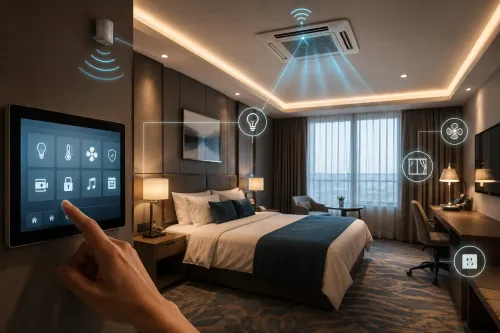

Technology has become an essential part of every workplace, but simply introducing digital tools does not automatically make an office smarter. True workplace automation technology focuses on creating an environment where systems, devices, and everyday operations work together to improve efficiency, reduce manual effort, and support business growth.
Across New Delhi, organisations are investing in workplace automation as they modernise office spaces and adapt to changing work patterns. Whether it is a corporate office, consulting firm, healthcare facility, educational institution, or commercial establishment, automation helps businesses operate more efficiently while improving the overall employee experience.
If you're planning to upgrade your workplace, understanding what to look for before investing can help you choose a solution that delivers long-term value.
What Is Workplace Automation Technology?
Workplace automation involves integrating intelligent systems that automate routine business operations and facility management tasks.
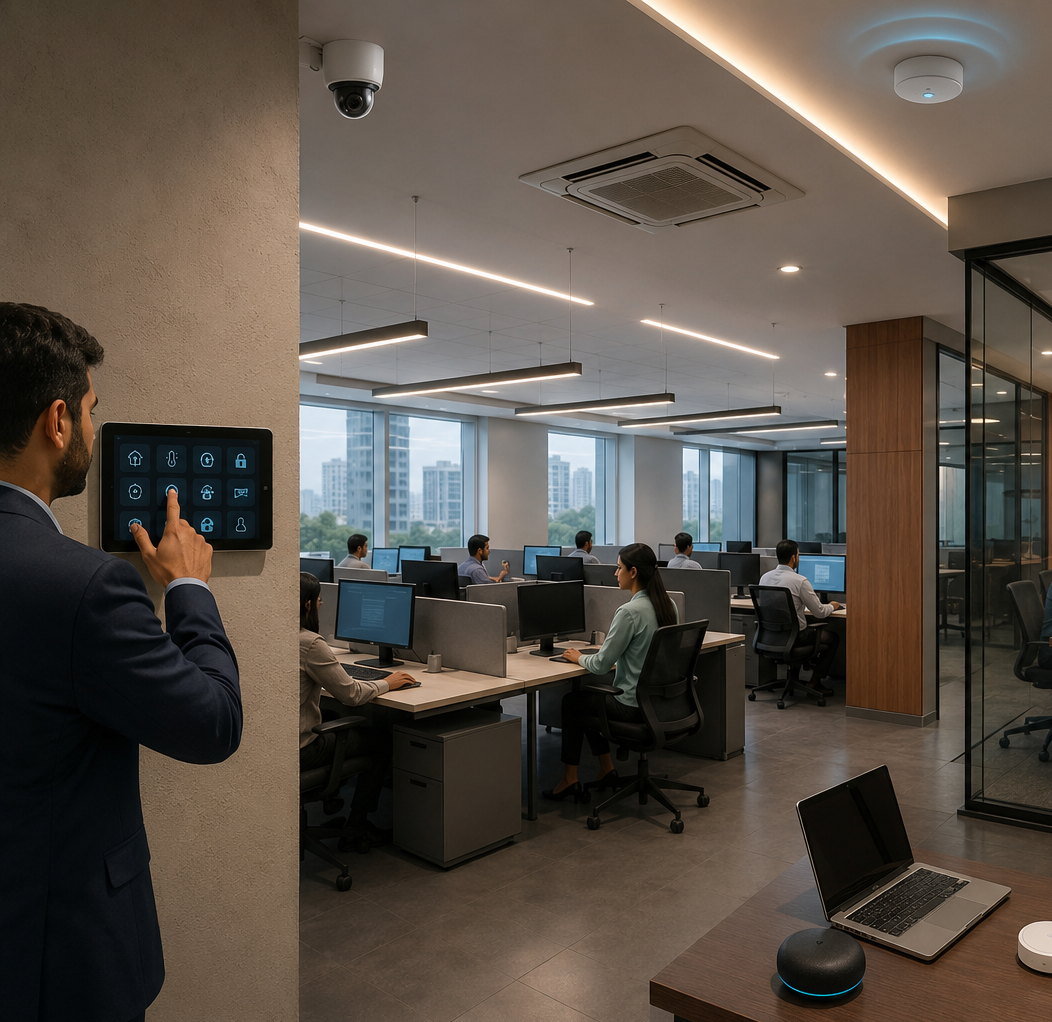
Instead of relying on separate controls for lighting, climate, security, meeting rooms, and access management, automation brings these functions together through a central platform.
Typical workplace automation includes:
- Intelligent lighting systems
- HVAC automation
- Access control
- Smart surveillance
- Meeting room automation
- Visitor management
- Occupancy monitoring
- Audio-visual integration
- Energy management systems
The objective is to simplify operations while creating a smarter, more responsive work environment.
Signs Your Workplace Is Ready for Automation
Many businesses assume automation is suitable only for newly constructed offices. In reality, existing workplaces often benefit the most.
You may be ready for workplace automation if:
- Employees frequently forget to switch off lights or equipment.
- Meeting rooms are difficult to manage.
- Energy bills continue to increase.
- Security systems operate independently.
- Facility management requires constant manual supervision.
- Office expansion is planned in the near future.
These challenges often indicate that connected automation can improve operational efficiency.
Benefits That Extend Beyond Convenience
One of the biggest misconceptions about workplace automation is that it simply makes offices more comfortable.
While employee convenience is important, automation also delivers measurable operational benefits.
These include:
- Reduced administrative effort.
- Better resource utilisation.
- Faster facility management.
- Improved workplace security.
- Lower energy consumption.
- Greater operational consistency.
- Enhanced employee satisfaction.
Together, these improvements support long-term business performance.
How Automation Improves Daily Business Operations
Automation quietly manages routine activities without disrupting employees.
For example, before office hours begin:
- Entrance systems prepare for employee access.
- Air conditioning reaches the desired temperature.
- Lighting activates only in occupied zones.
- Meeting rooms become operational.
At the end of the day:
- Non-essential electrical equipment powers down.
- Security systems activate automatically.
- Access permissions adjust after working hours.
- Energy consumption decreases without manual intervention.
These small efficiencies save valuable time every day.
Think Beyond Today's Requirements
One mistake businesses often make is selecting automation based only on their current needs.
Instead, organisations should evaluate future growth.
Ask yourself:
- Will the workforce expand?
- Are additional office floors planned?
- Will hybrid work become permanent?
- Could new departments require separate access control?
- Will additional meeting rooms be added?
Choosing a scalable automation platform prevents expensive replacements later.
Integration Is More Important Than Individual Features
A workplace may already have CCTV cameras, biometric attendance, conference room equipment, and lighting controls.
However, if these systems operate independently, employees and facility managers spend more time switching between applications.
Integrated automation allows different technologies to communicate.
For example:
- Meeting room bookings can automatically activate lighting and air conditioning.
- Access control can trigger visitor notifications.
- Occupancy sensors can adjust energy usage.
- Security systems can coordinate with emergency lighting.
This creates a more efficient workplace with fewer manual processes.
Questions Every Business Should Ask Before Investing
Before choosing an automation provider, consider the following:
- Is the system easy for employees to use?
- Can new technologies be added later?
- Does the solution integrate with existing infrastructure?
- How reliable is technical support?
- Are software updates available?
- Will the automation reduce operating costs over time?
Looking beyond the initial installation cost often leads to better long-term value.
Why Professional Planning Makes a Difference
Every organisation has different operational priorities. A corporate headquarters, educational institution, healthcare clinic, and commercial office all require different automation strategies.
Professional planning ensures that technology supports business workflows rather than complicating them.
Companies such as Domotics Automation Pvt. Ltd. work with businesses to design integrated workplace automation systems that combine lighting, climate control, access management, security, and intelligent office technologies into one scalable platform. Through sales.domotics.co.in, organisations can also explore automation solutions suited to different commercial environments and future expansion plans.
As businesses across New Delhi continue embracing digital transformation, workplace automation technology is becoming a practical investment rather than a luxury. Choosing a solution that is scalable, user-friendly, and professionally integrated helps organisations create workplaces that are efficient, secure, and prepared for future growth.